How does hydrogen affect the microstructure of steel, and what determines its resistance to degradation? These were among the questions investigated by Łukasz Poloczek, DEng, during a research fellowship at the Università Politecnica delle Marche in Ancona. Conducted as part of the KMM-VIN Research Fellowship – Multi-functional Materials Network programme, the research focused on the mechanisms of hydrogen embrittlement, one of the key challenges associated with the use of hydrogen in industry.
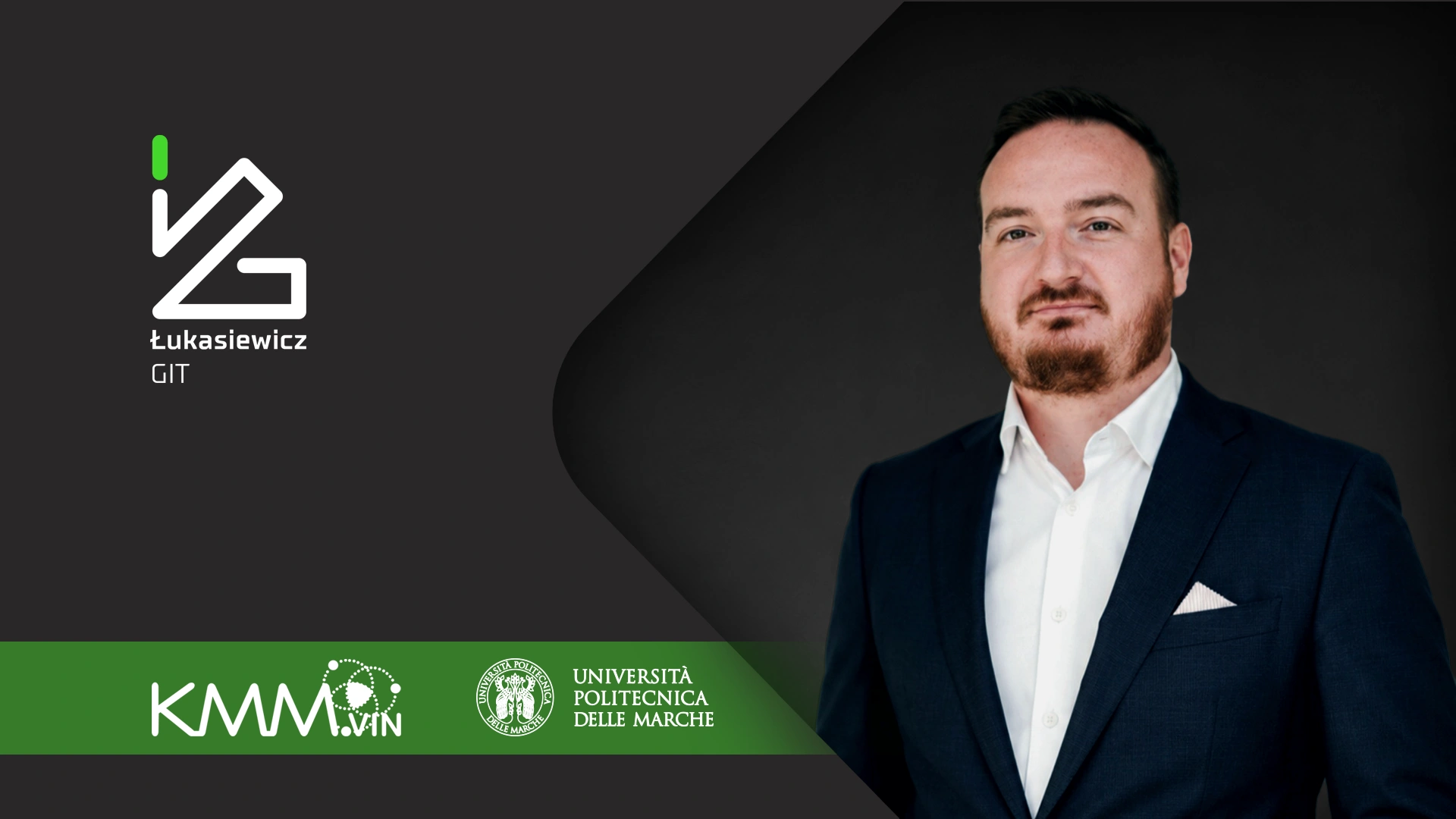
Łukasz Poloczek, DEng, Area Leader serving as Head of the Process Technology Simulations Research Group at Łukasiewicz – GIT, completed a one-month research internship at the Università Politecnica delle Marche – Faculty of Engineering in Ancona, Italy. The fellowship was carried out as part of the KMM-VIN Research Fellowship – Multi-functional Materials Network programme.
The research topic addresses one of the key areas of contemporary research into materials designed to operate in hydrogen environments. Due to its properties, hydrogen can penetrate the metal structure, affecting its microstructure and mechanical properties and, under certain conditions, contributing to the development of hydrogen embrittlement. Understanding the mechanisms behind this phenomenon is essential for designing safe and durable materials for the hydrogen economy.
During the internship, the impact of hydrogen on the microstructure and mechanical properties of steel was analysed, with particular emphasis on hydrogen diffusion and its interaction with individual microstructural constituents. An important part of the research also involved identifying the mechanisms responsible for crack initiation and propagation.
The research programme included mechanical tests conducted in a hydrogen atmosphere at temperatures of up to 500°C, using the advanced Gleeble 3800-GTC thermomechanical process simulator. This made it possible to reproduce the conditions of hydrogen–material interaction and assess changes in the material’s mechanical behaviour at elevated temperatures.
The mechanical tests were complemented by a detailed microstructural analysis using scanning and transmission electron microscopy (SEM and TEM), as well as electron backscatter diffraction (EBSD). The use of complementary research methods enabled the analysis of structural changes occurring in the material and the identification of mechanisms associated with the initiation and development of damage.
The aim of the research was to deepen the understanding of the mechanisms of hydrogen-induced degradation of steel and to identify the factors influencing its resistance to hydrogen embrittlement. The results of this type of research can provide a basis for the development and selection of materials intended for applications in hydrogen environments, while also supporting the development of technologies that enhance their durability and operational safety.
The internship also provided an opportunity to exchange knowledge and experience with the international scientific community and establish cooperation in the field of research on materials operating in hydrogen environments. Such partnerships strengthen the research potential of Łukasiewicz – GIT and create opportunities for further joint research initiatives addressing the challenges associated with the development of the hydrogen economy.