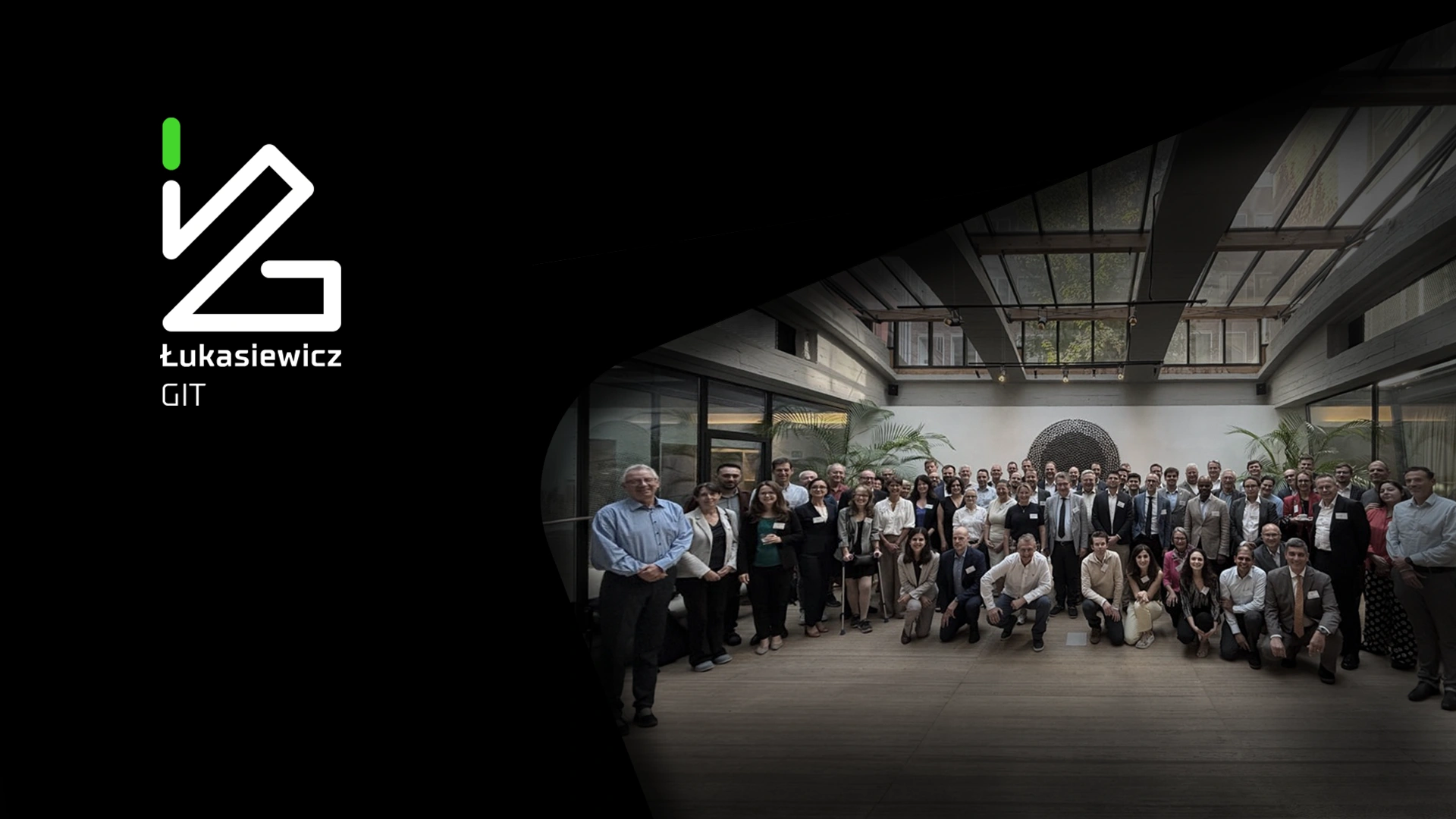
On 16 September, the Joint Technical Forum for the Metals Ecosystem was held in Brussels, focusing on the development of the Steel and Metals Partnership (SAMP) – an initiative aimed at establishing a common framework for research and innovation across the entire European metals ecosystem. Representatives of Łukasiewicz – GIT took part in the meeting, organised by ESTEP, EUROFER, EUROPEAN ALUMINIUM and European Metals.
A common framework for the metals sector
The Steel and Metals Partnership (SAMP) is proposed as a partnership co-developed with the industrial sector under the future FP10 programme. The initiative builds on the Clean Steel Partnership model, extending it to the entire metals ecosystem, including both the steel sector and non-ferrous metals.
The aim of SAMP is to establish a coherent framework for research and technological cooperation addressing challenges related to the sourcing of primary and secondary raw materials, their efficient use, and the development and deployment of new metal production technologies.
During the first meeting, participants focused on identifying the key technological challenges and defining the critical process parameters that will be addressed in further work within six dedicated working groups.
Łukasiewicz – GIT experts take part in the working groups
Jarosław Marcisz, BEng, PhD, DSc, Deputy Director of Łukasiewicz – GIT, participated in the work of WG4 “Advanced circular metals for a sovereign Europe”. The group focused on the development of advanced circular metallic materials and their role in strengthening Europe’s technological sovereignty.
The discussions covered, among other topics, high-performance alloys and high-strength steels, materials designed with durability, safety, sustainability and repairability in mind, as well as materials for green mobility and transport, defence and aerospace, microelectronics, electrification and digital infrastructure.
Mateusz Dudek, BEng, MSc, from Łukasiewicz – GIT participated in the work of WG1 “Alternatives to Fossil Carbon, Electrification and Energy Management & Efficiency”. The group addressed issues including the replacement of fossil carbon in metallurgical processes, process electrification, the use of hydrogen and hydrogen carriers, heat recovery, industrial energy storage, grid integration, and improved energy management and efficiency. The impact of new technological processes on product quality was also an important topic.
Contributing to the European research and innovation agenda
The participation of Łukasiewicz – GIT representatives in the SAMP working groups is part of the Institute’s involvement in European research and innovation cooperation, as well as in the exchange of knowledge and expertise related to the transformation of the metals sector.
The work on SAMP forms part of the broader process of shaping European research priorities for the next financial perspective. Its aim is to create conditions for the joint development of technologies addressing the challenges of the energy transition, circularity, resource efficiency and the competitiveness of European industry.